Epoxy Coatings
Epoxy can provide strong adhesion, useful film build, and a stable base for color or flakes. Conventional formulations may cure more slowly and can discolor with sustained sunlight exposure.
Independent guidance for Sarasota homeowners
Materials Installation Costs
Compare epoxy, polyaspartic, polyurethane, and multilayer systems by their actual roles, limitations, compatibility, appearance, and exposure conditions.
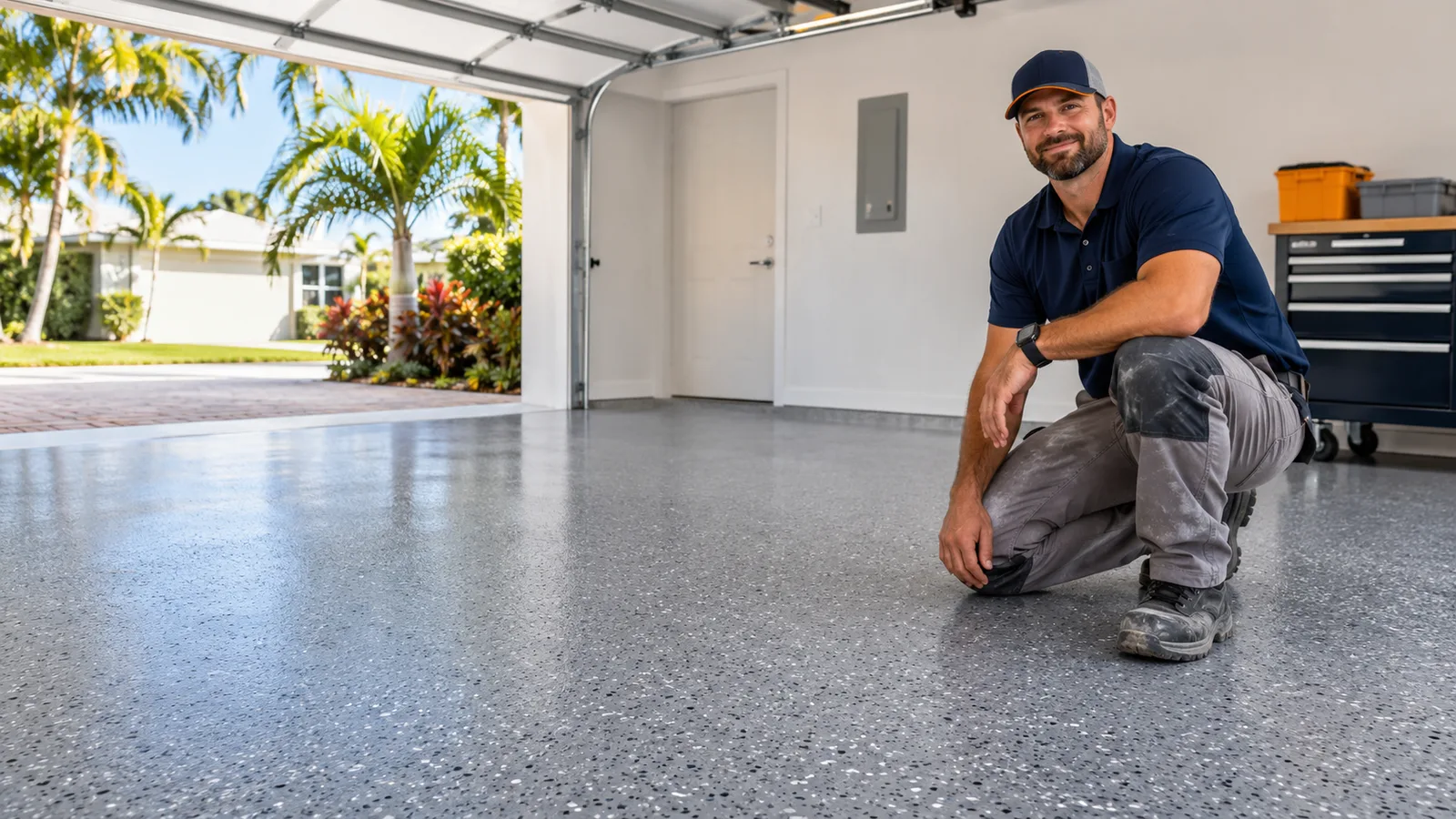
A dependable epoxy floor starts with slab inspection, mechanical preparation, compatible coating layers, and cure conditions suited to the project.
Homeowners comparing epoxy flooring Sarasota FL options should look beyond color samples and generic chemistry labels. The useful comparison is the complete system: primer or base coat, decorative layer, topcoat, exposure limits, traction, appearance, and repairability.
Slab condition and moisture can limit which systems are appropriate, but this page concentrates on material selection. The separate installation guide covers concrete evaluation, preparation, application sequence, curing, and maintenance in detail.
“Epoxy floor” is often used as a general label, but many systems combine different resin chemistries. Epoxy can provide a strong bond and useful build as a primer or base coat; polyaspartic or polyurethane products are often considered for faster curing, wear layers, or improved ultraviolet stability. No chemistry is automatically best for every slab. Compare the complete system, including preparation, moisture tolerance, recoat windows, sunlight exposure, traction, and repairability. For the installation sequence and ongoing care, see the epoxy garage flooring installation guide.
Start with the garage's exposure and use: sunlight at the door, wet vehicles, tire traffic, stored chemicals, desired sheen, and cleaning habits. Then compare the named primer, body coat, decorative layer, and topcoat as one compatible assembly.
Moisture compatibility depends on the substrate, test findings when testing is appropriate, and the manufacturer's limits. A product described as moisture tolerant is not permission to ignore active water intrusion, drainage problems, or an unsuitable slab.
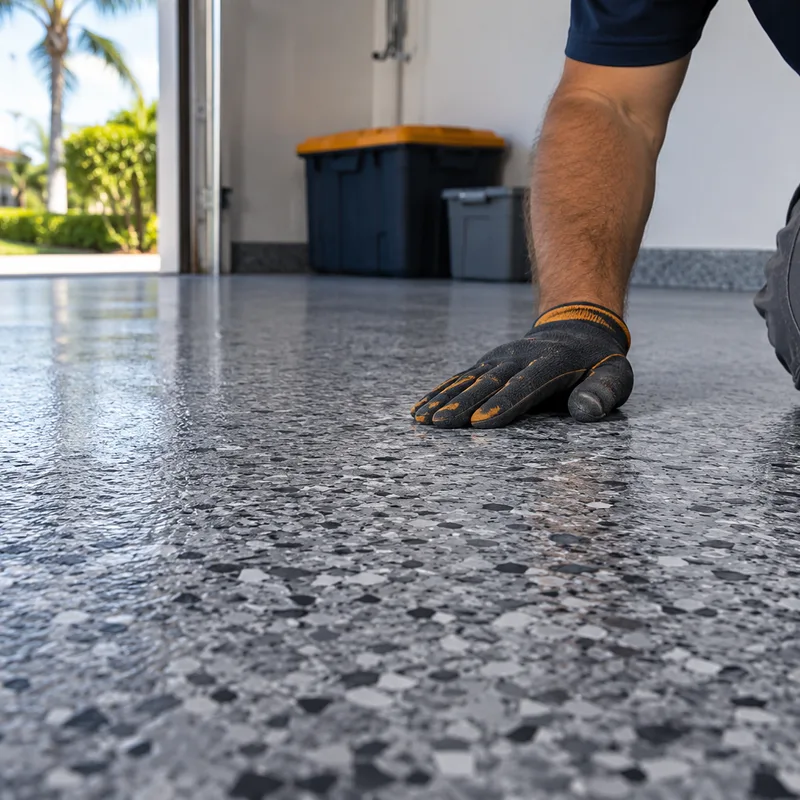
Appearance is also functional. More texture can improve traction but hold more soil; higher gloss reflects more light but can emphasize scratches; flakes disguise small debris better than solid color. Ask how future spot repairs are performed and whether replacement materials are likely to remain available.
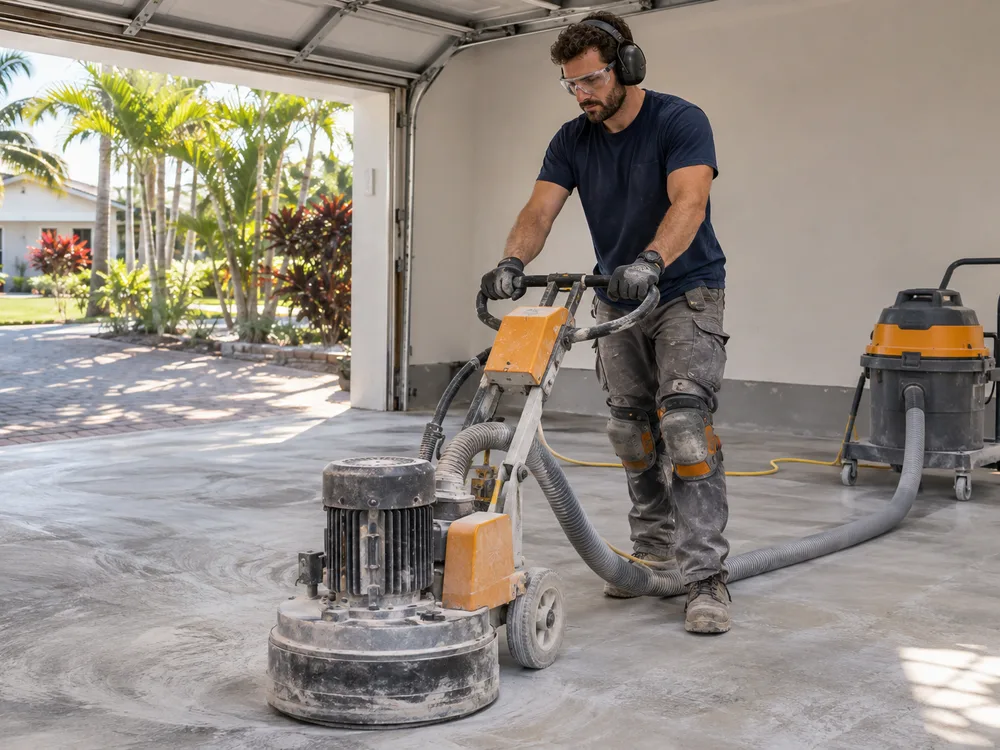
Epoxy can provide strong adhesion, useful film build, and a stable base for color or flakes. Conventional formulations may cure more slowly and can discolor with sustained sunlight exposure.
Polyaspartic products are often selected for faster return-to-service, UV stability, or a durable clear wear layer. Short working times can require careful application, especially on warm concrete.
A compatible polyurethane topcoat may add abrasion, chemical, gloss, or UV performance over a suitable base. It is generally part of a system, not a substitute for preparing the concrete.
A garage system may combine primer, pigmented base, decorative broadcast, and a different clear topcoat. Layer compatibility and manufacturer recoat windows matter more than one chemistry label.
Neutral gray, tan, and blended flakes can complement surrounding finishes. Samples should be viewed in the actual lighting because color and sheen change under different fixtures.
Solid colors create a uniform appearance but reveal dust, repairs, roller marks, and surface variation more readily than full-flake finishes. Localized repairs may also be more visible.
The slab is checked for cracks, spalling, previous coatings, contamination, and signs of moisture. The intended use of the floor is discussed before materials are chosen.
The floor is mechanically ground and vacuumed. Suitable cracks and surface defects are repaired, and edges or difficult areas receive detailed preparation.
A compatible primer or pigmented base coat is mixed and applied within its specified working time. Coverage and environmental conditions are monitored during application.
For flake floors, vinyl chips are broadcast into the wet base. After curing, excess material is recovered and the surface is scraped to produce a consistent texture.
A clear topcoat seals the decorative layer and provides the final sheen and wear surface. An appropriate traction additive may be included when extra slip resistance is requested.
Foot traffic, stored items, and vehicles stay off the floor until the coating reaches the required cure stage. Actual return-to-use times depend on the products and job conditions.
Sarasota's warm, humid climate makes slab assessment and installation conditions especially relevant. Moisture vapor can interfere with adhesion, while high temperatures can shorten a coating's working time. Product data sheets set acceptable temperature, humidity, recoat, and cure conditions, and those limits should guide the installation schedule.
For material selection, the practical question is how much sun, wet traffic, grit, and cleaning the floor will receive. Those exposure details help determine whether UV stability, added texture, easier soil concealment, or repair visibility should carry more weight.
These details influence color, texture, staging, and topcoat selection. They do not replace evaluation of the actual slab. Two nearby homes can have different moisture behavior, previous repairs, and surface contamination.
The material name alone does not predict price. A thin solid-color coating over sound concrete and a multilayer flake system with removal, repairs, moisture control, and a UV-stable topcoat have very different scopes.
Compare proposals by preparation method, named coating layers, coverage, repair allowances, traction, cure restrictions, and exclusions rather than by price per square foot alone. The cost and installer selection guide explains what should appear in a written scope.
A coating estimate should identify the preparation method, coating layers, finish, repair allowances, and return-to-use plan so you can compare the full scope rather than one price.
Understand Installation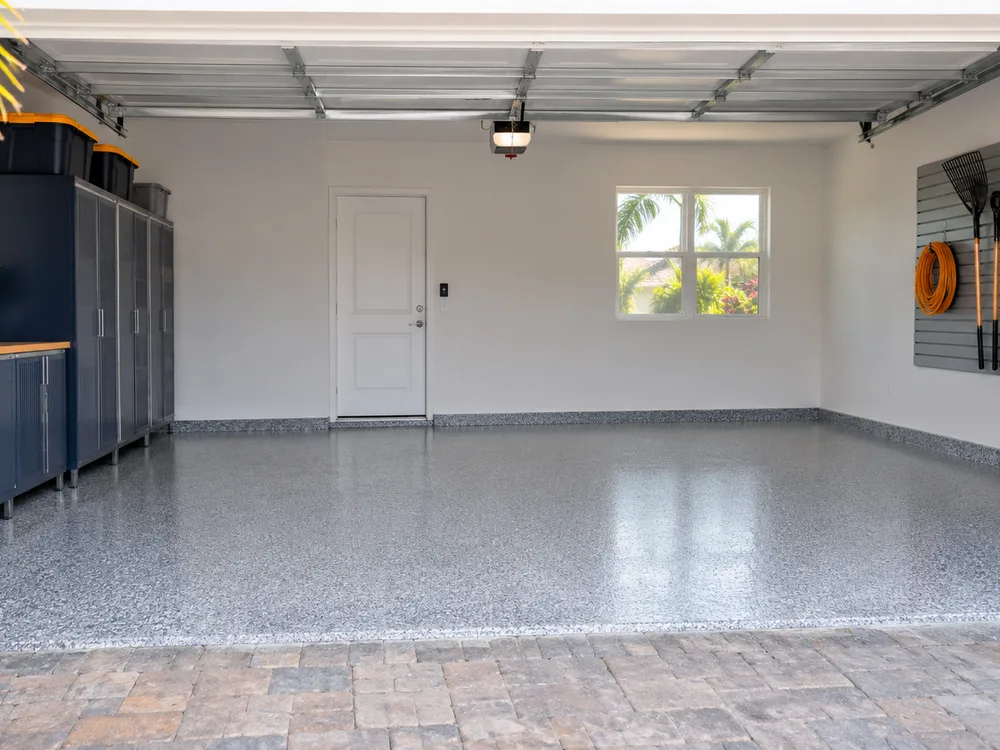
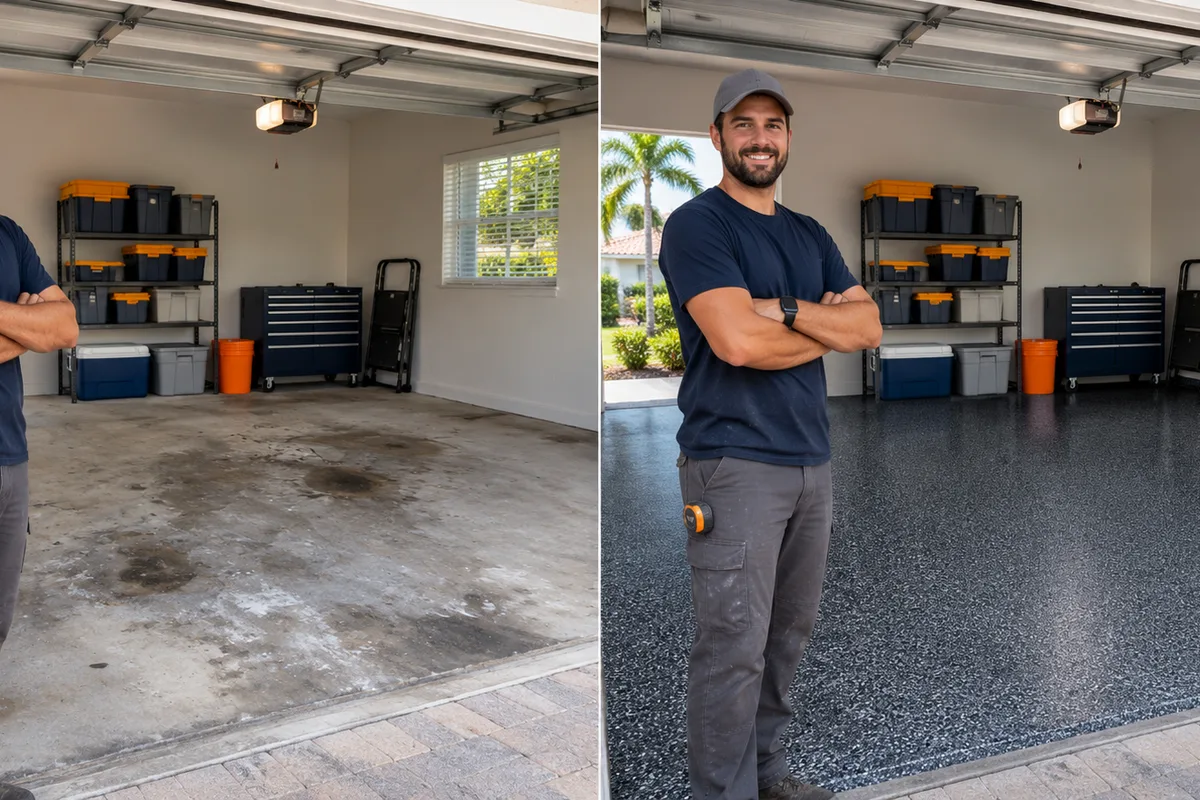
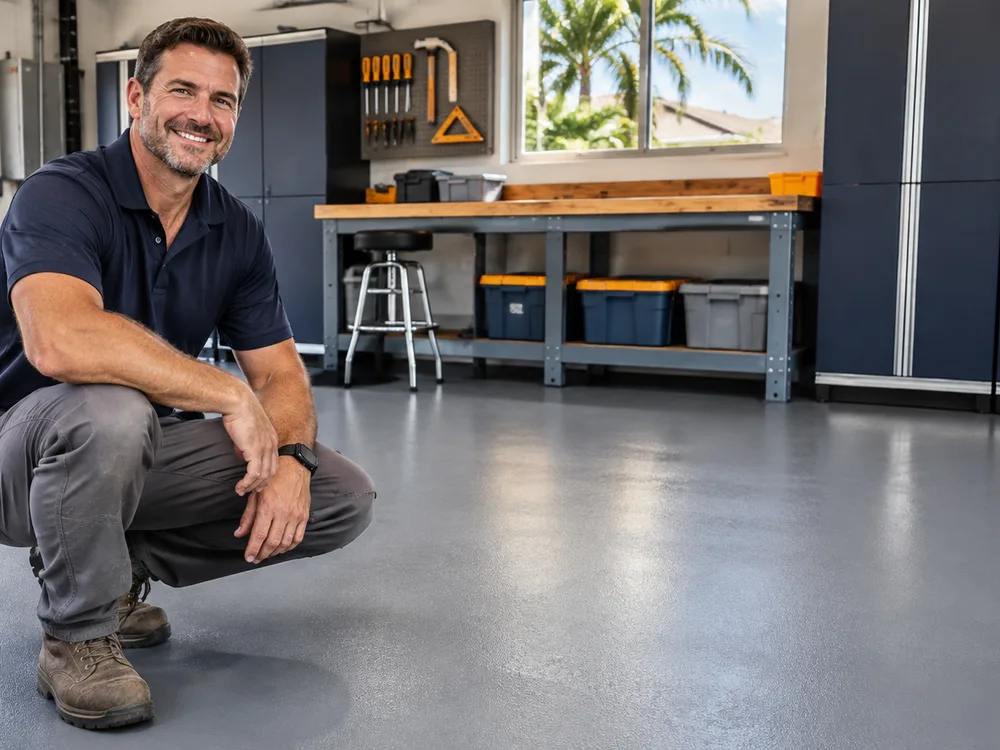
Many residential garage installations take about 2 to 3 days, but the schedule depends on repairs, coating chemistry, humidity, temperature, and required cure times. Faster-curing polyaspartic components may shorten certain stages, while moisture mitigation or extensive removal adds time. Vehicle traffic is allowed only after the installed system reaches its specified cure stage.
A correctly prepared, professional coating system can handle normal vehicle parking, but preparation and product compatibility determine how well it resists hot-tire pickup. Diamond grinding, a sound bond to the concrete, and a suitable topcoat matter more than simply applying a thicker coat. Existing sealers and moisture problems must be addressed first.
Traditional epoxy is usually better protected from direct sunlight because ultraviolet exposure can cause discoloration or chalking. A covered lanai may be suitable for a system with a UV-stable topcoat, while heavily exposed concrete may call for a different coating chemistry. The amount of sun and weather exposure should be checked on site.
Any coated floor can become slippery when wet, but texture and traction additives can improve grip. A full-flake broadcast naturally creates some profile, and aluminum oxide or polymer traction media can be added to certain topcoats. More texture can hold dirt and make mopping harder, so the finish should balance traction with cleaning.
Cracks and spalled areas should be evaluated and suitable defects repaired before coating. Static cracks can often be filled with compatible repair products, but active slab movement may cause a crack to reappear. Control and expansion joints require separate judgment because filling a joint can restrict its intended movement.
Routine cleaning usually requires dry dust removal followed by a neutral cleaner and soft mop. Sand tracked into Sarasota garages should be swept or vacuumed because grit can abrade the finish under tires and storage equipment. Avoid harsh solvents, highly abrasive pads, and cleaners that leave a slippery residue.
A new coating can sometimes be installed after the old material is mechanically removed and the underlying concrete is assessed. Coating directly over loose paint or a poorly bonded layer is unreliable because the new system is only as sound as the material beneath it. Removal effort is confirmed during the slab inspection.
Compare the full coating build—not just the word epoxy—then use the installation and cost guides to prepare questions for independent providers.