Experience and Concrete Evaluation
Ask about comparable residential garage work, how the slab will be evaluated, what visible conditions require added investigation, and when moisture testing may be appropriate.
Independent guidance for Sarasota homeowners
Materials Installation Costs
Compare project scope, written estimates, installer qualifications, warranty terms, exclusions, and practical warning signs before making a purchasing decision.
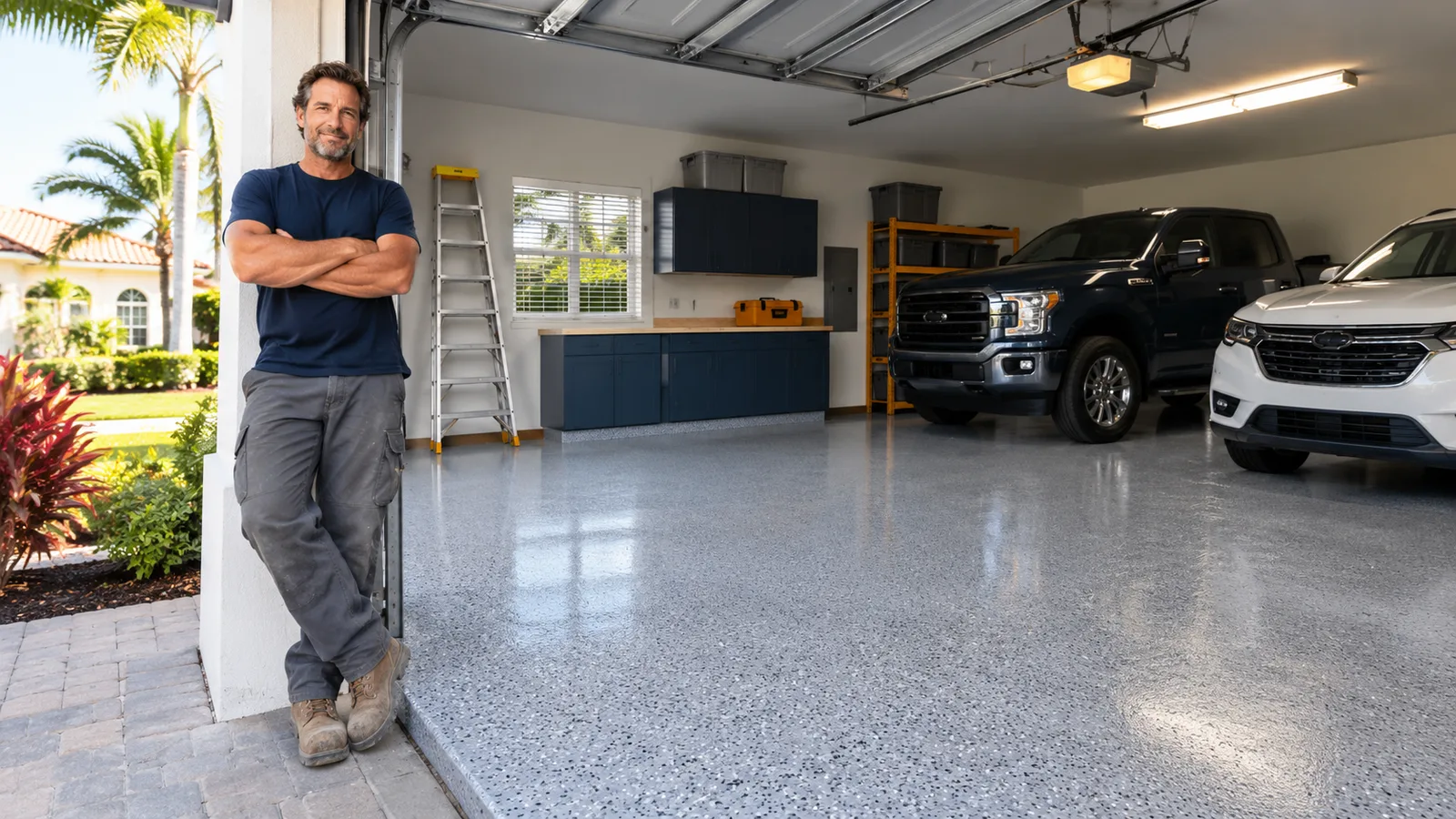
Floor area matters, but configuration can matter just as much. Stem walls, steps, thresholds, tight edges, fixed equipment, and difficult access increase detailed labor. Removing old paint or coating, grinding contaminated concrete, repairing cracks or spalls, and addressing moisture concerns can expand the scope before any finish layer is applied.
The specified chemistry and number of layers also affect material use, labor, cure restrictions, and return visits. Decorative broadcasts, traction additives, edge work, and moisture mitigation add distinct tasks. Quotes should separate these decisions clearly enough that homeowners can tell whether competing installers are pricing comparable systems.
Access, scheduling, weather, garage downtime, and product-specific cure requirements may affect sequencing. A lower total can reflect a narrower scope rather than better value, so compare preparation, repairs, layers, exclusions, and return-to-use instructions before comparing price alone.
A useful proposal identifies the floor area and preparation method, including edge work and removal of existing coatings. It should name the products or product family, describe each coating layer, state the decorative finish and traction specification, and identify planned crack or spall repairs.
Compare how each bid handles moisture evaluation, visible slab problems, thresholds, stem walls, cleanup, adjacent-surface protection, scheduling, and return visits. Ask for written return-to-use instructions rather than assuming all fast-cure products share the same timetable.
Review warranty language and exclusions alongside price. Note who moves garage contents, what conditions can trigger added charges, how change orders are approved, and which items are not included. A detailed estimate is easier to compare and reduces reliance on verbal assumptions.
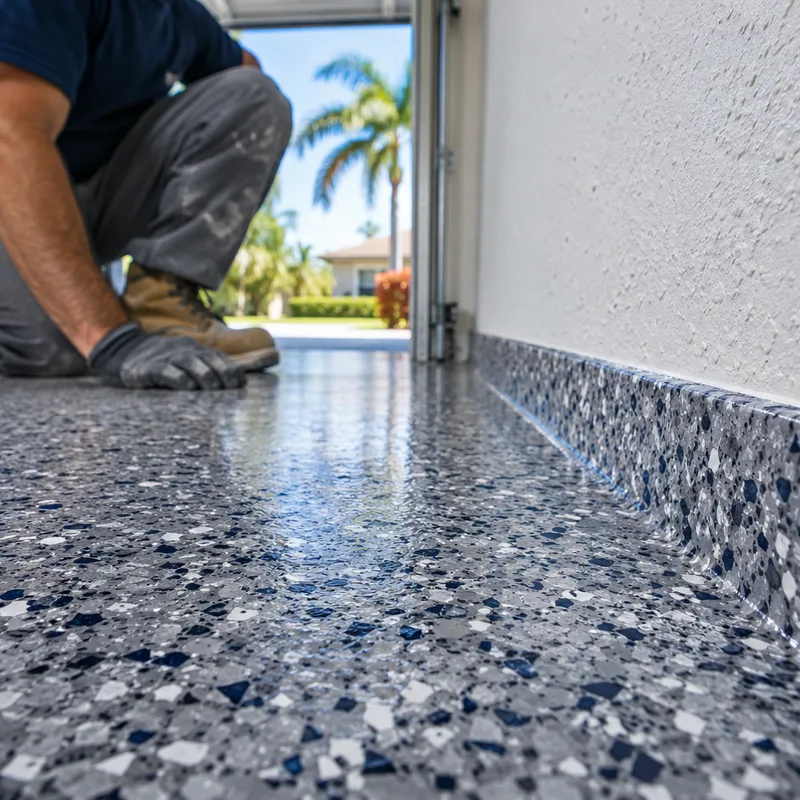
Ask about comparable residential garage work, how the slab will be evaluated, what visible conditions require added investigation, and when moisture testing may be appropriate.
Ask what grinding and dust-control equipment will be used, how edges are prepared, how oil contamination is handled, and how cracks, spalls, and control joints will be treated.
Request product names, layer sequence, technical requirements, cure instructions, and an explanation of why the system suits the slab, sunlight exposure, moisture conditions, and intended use.
Ask for written product and workmanship terms, exclusions, maintenance obligations, and claim procedures. Clarify who clears the garage, protects adjacent surfaces, and handles damage or cleanup concerns.
Ask for current insurance documentation, references, and examples of completed work. Verify any licensing or registration requirements that apply to the project with the appropriate Florida or local authority rather than assuming one rule covers every scope.
Clarify start dates, expected return visits, weather contingencies, ventilation, initial cure, light foot traffic, storage replacement, and vehicle-ready conditions in writing.
The garage is measured and checked for existing coatings, contaminants, cracks, spalling, control joints, and signs that moisture may affect adhesion. The intended use of the floor and desired appearance are reviewed before a system is specified.
The floor must be emptied before work begins. Mechanical grinding opens the concrete surface, removes weak material, and creates the profile needed for bonding. Edges and corners require dedicated tools so preparation remains consistent near walls.
Suitable cracks, pits, and damaged spots are filled or patched. Dust from grinding is removed thoroughly because residue can weaken adhesion. Oil-contaminated areas may require additional treatment and may still affect coating suitability.
The specified primer or base coat is mixed and applied within its working time. Color flakes are broadcast while the receiving coat is wet. With full-flake systems, excess flakes are recovered and the surface is scraped before the clear coat.
The protective topcoat is applied at the specified coverage rate. Foot traffic, stored items, and vehicles must stay off the floor until the relevant cure window has passed. Cure time varies with the product, temperature, humidity, and ventilation.
Online price ranges can hide major scope differences. Floor area matters, but so do coating removal, grinding, edge preparation, oil contamination, crack and spall repair, moisture findings, flake coverage, topcoat chemistry, access, and the number of return visits. An empty, sound slab is a different project from a painted or moisture-affected floor.
Request itemized written proposals and compare like with like. The scope should identify the preparation equipment, repair assumptions, named coating layers, finish and traction choices, cure restrictions, cleanup, exclusions, and who is responsible for moving belongings. Be cautious when a quote relies mainly on warranty length or a one-day promise without explaining slab condition and product requirements.
Before selecting an installer, verify the contracting entity, current Florida licensing requirements that apply to the work, insurance, manufacturer instructions, and recent project references independently. This website does not inspect slabs, recommend a specific contractor, or guarantee provider claims.
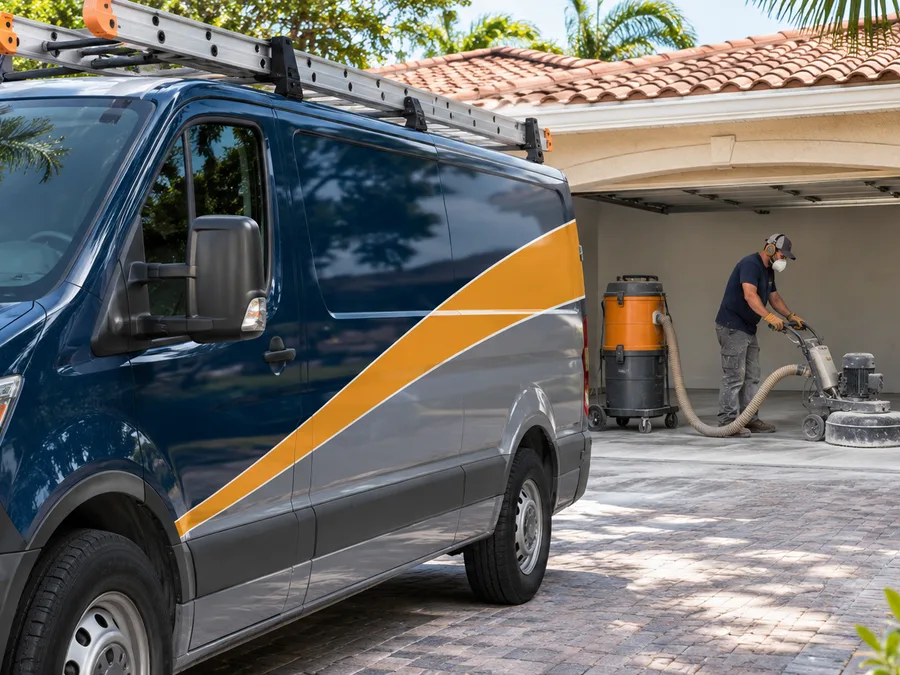
Local weather and slab history can change scope and cost, but they do not support a universal Sarasota price. Moisture evaluation, coating removal, contamination treatment, repairs, ventilation, and product-specific application limits should appear in the proposal when relevant.
Compare bids by the conditions each contractor has included, excluded, or priced as an allowance. Two nearby garages can require different work because of previous coatings, porosity, repairs, access, or moisture behavior.
For the technical installation sequence and curing requirements behind those line items, use the installation and ownership guide rather than relying on a sales estimate alone.
Compare written scope, products, exclusions, warranty terms, and return-to-use requirements before selecting a contractor.
Understand InstallationInstallation commonly takes more than one visit, with the full schedule determined by preparation, the number of coating layers, and required cure times. Grinding and repairs may extend the work, while Sarasota's temperature and humidity can affect application windows. The garage must remain clear until the system has cured enough for foot traffic, stored items, and vehicles.
Epoxy can sometimes be installed after an existing coating is removed, but applying directly over unknown or failing paint is risky. The old layer must be tested for adhesion and compatibility. Mechanical removal is often the sounder approach because the new system can then bond to properly profiled concrete rather than relying on an aging paint film.
Humidity does not automatically cause peeling, but moisture in or moving through the slab can interfere with adhesion. Surface preparation, substrate temperature, dew point, product limits, and cure conditions all matter. If the slab shows signs of moisture-related trouble, further evaluation may be needed before a coating system is chosen.
Vehicle return time depends on the exact coating system and curing conditions, and the installer's stated cure schedule should be followed. A floor may tolerate careful foot traffic before it is ready for tires or heavy storage. Sarasota heat can accelerate some reactions, while high humidity may affect others, so the product specification controls the timing.
A smooth, glossy coating can become slippery when water, oil, or sand is present. A compatible traction additive can increase texture in the topcoat. For garages that receive rainwater or beach sand, the desired grip should be weighed against cleaning needs because heavier texture holds more dirt.
Many nonstructural cracks and surface defects can be prepared and filled before coating, but no repair can guarantee that a moving crack will never reappear. Control joints may need different treatment from random cracks. An on-site inspection identifies the defect, checks for movement or moisture, and sets realistic expectations for the finished floor.
Sweep or dust-mop loose grit regularly, then use a damp mop and a mild, coating-safe cleaner as needed. Clean oil and chemical spills promptly, avoid harsh abrasive tools, and place protective pads beneath sharp metal equipment. Sarasota garages that collect sand benefit from frequent sweeping because grit can act like an abrasive under tires.
Use the cost and hiring checklist on this page, then compare coating systems and installation requirements before speaking with independent contractors.