Existing Surface Conditions
Identify old paint or coatings, oil contamination, cracks, spalling, hollow areas, and signs of moisture. Clarify which conditions will be repaired, removed, tested, or excluded.
Independent guidance for Sarasota homeowners
Materials Installation Costs
Understand slab evaluation, surface preparation, application, curing, troubleshooting, maintenance, and the limits of a coated garage floor.
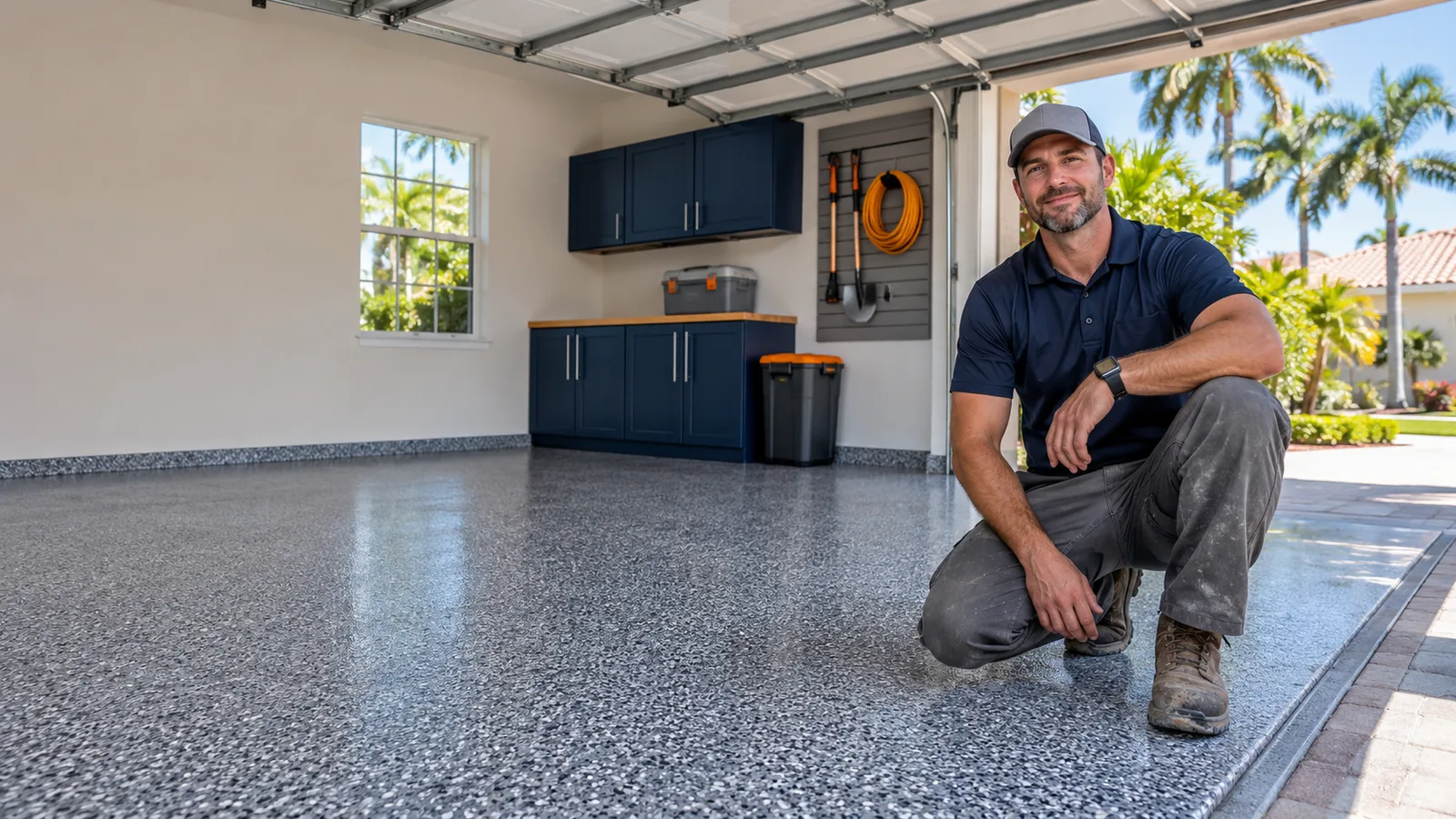
Epoxy garage flooring performance depends first on the slab beneath it and the way each installation stage is completed. This guide follows concrete evaluation, mechanical preparation, repairs, coating application, curing, maintenance, and realistic ownership limits.
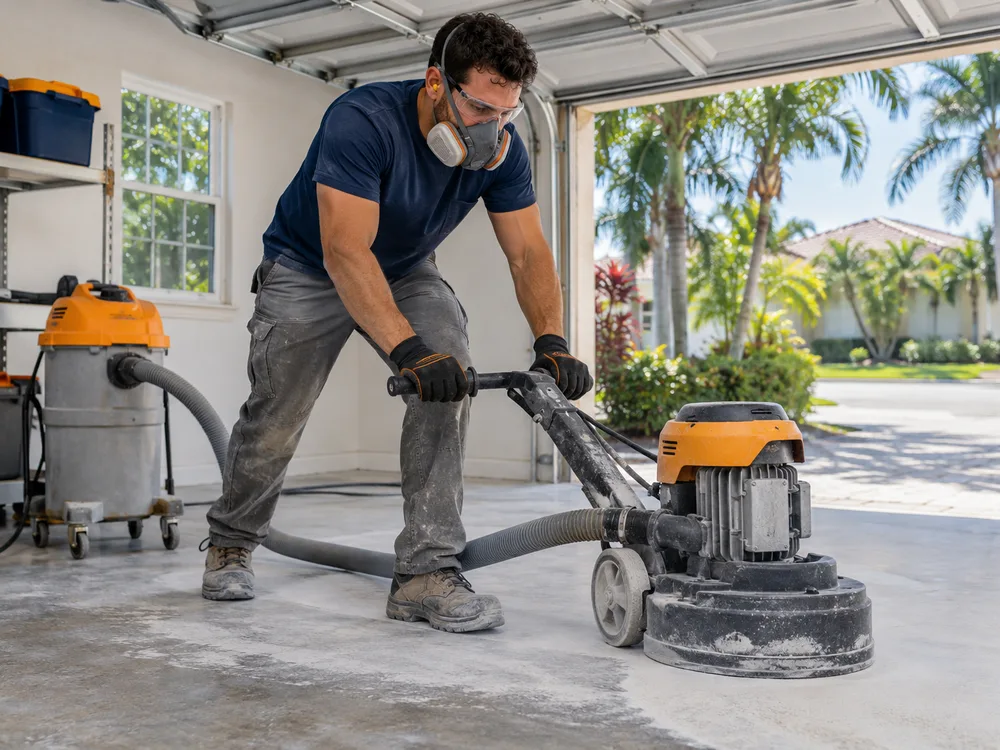
The coating is only as reliable as the concrete beneath it. A qualified installer should evaluate the slab for cracks, previous coatings, contamination, and signs of moisture before recommending a system. Mechanical diamond grinding opens the concrete surface so the base coat can bond directly to it. Oil spots need targeted treatment, while cracks and surface defects are repaired where appropriate before coating begins.
Product limits for temperature, humidity, recoat timing, and cure should guide the work rather than a universal schedule. For chemistry, finish, and system-build comparisons, read the epoxy flooring systems guide.
A garage may be a parking area, workshop, storage room, home gym, or a combination of all four. The right system depends on how the space is used. A floor exposed to vehicle fluids and rolling tool cabinets has different needs than one used mainly for storage.
A typical decorative system includes a prepared concrete substrate, a pigmented base coat, broadcast vinyl flakes, and a protective clear topcoat. Flake coverage can be light or full, depending on the desired look and texture. Color blends range from understated neutrals to higher-contrast combinations that make the garage feel more finished.
Gloss level and surface texture deserve practical consideration. A high-gloss finish reflects more light, while added traction media can improve grip. Any coated floor may become slippery when wet, so the intended use, drainage, and likely water exposure should guide the finish selection. UV-stable topcoat options are worth discussing near garage door openings that receive regular sunlight.
Identify old paint or coatings, oil contamination, cracks, spalling, hollow areas, and signs of moisture. Clarify which conditions will be repaired, removed, tested, or excluded.
Confirm the mechanical grinding equipment, dust control, edge preparation, and target surface profile. Ask how contamination is treated and how prepared concrete is protected before coating.
Clarify which cracks and spalls will be repaired, which joints remain functional, and how movement may appear later. A coating cannot stop structural movement or guarantee cracks will not return.
Ask what observations would trigger moisture testing, what method would be used, and how results affect the system. Testing may be appropriate when history, visible signs, or slab conditions raise concern.
Decide who clears stored items, disconnects appliances, protects walls and driveways, handles dust, and manages access while layers cure. Discuss weather contingencies before work begins.
Obtain written guidance for application time, initial cure, light foot traffic, replacing stored items, and vehicle-ready conditions. Follow product- and condition-specific instructions rather than a universal timetable.
The slab is checked for existing coatings, curing compounds, oil contamination, cracks, moisture concerns, and areas that sound hollow or show surface weakness.
The garage must be emptied before work begins. Diamond grinding profiles the concrete and helps remove surface residue. Edges and corners receive separate attention.
Cracks, pits, and spalled areas are cleaned and filled with compatible repair material when appropriate. Control joints are handled according to the selected scope and expected slab movement.
The mixed coating is applied within its working time. Decorative flakes are broadcast at the selected coverage level while the base remains receptive.
After curing, loose flakes are removed and the surface is scraped to control texture. A compatible clear coat seals the system and provides the final wear surface.
Foot traffic, storage, and vehicles must remain off the floor for the specified periods. Cure times depend on the products, temperature, humidity, and installation conditions.
Installation cost depends on the amount of preparation and the number and type of coating layers. Existing coating removal, moisture concerns, crack repair, edge work, fixed equipment, and limited access can add time before any finish is applied.
Because this page concentrates on installation and care, detailed pricing questions belong in the Sarasota cost, climate, and installer selection guide. Ask every bidder to identify preparation, materials, cure restrictions, and exclusions in writing.
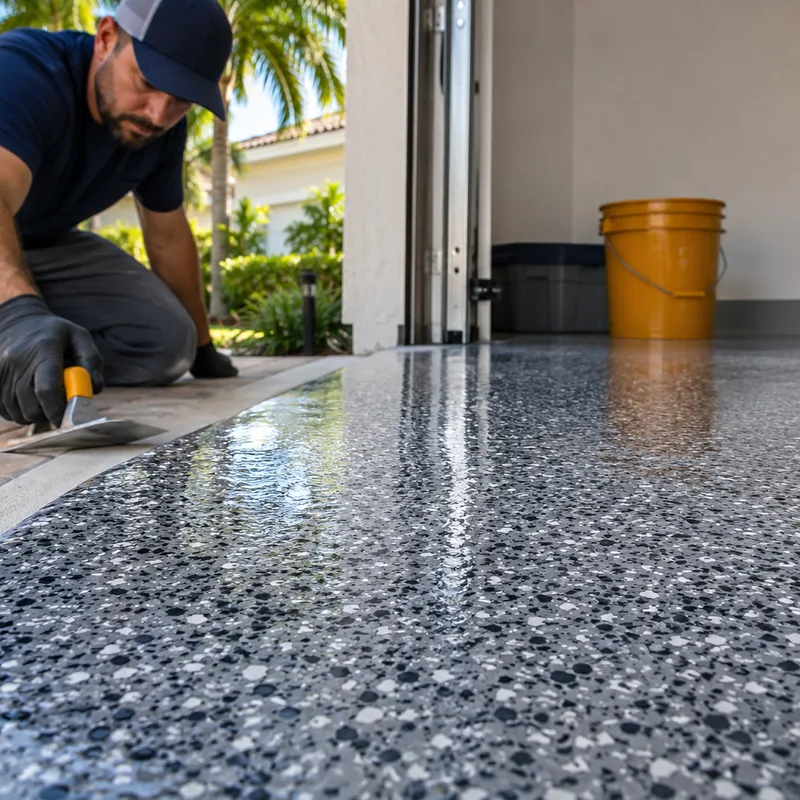
Sarasota conditions matter during installation because substrate temperature, air temperature, humidity, ventilation, and recoat windows can change working and curing behavior. Product data sheets—not a fixed local timetable—should control those decisions.
Dark areas, mineral deposits, blistering paint, or unexplained coating failure can justify closer moisture evaluation. A coating is not a cure for active water intrusion or excessive vapor transmission.
After installation, regular sweeping and prompt cleanup help limit abrasion from sand, rainwater residue, and lawn debris. Avoid dragging metal equipment and use pads beneath sharp or concentrated loads.
Routine care is simple. Remove grit with a soft broom or dust mop, then wash as needed with water and a mild, coating-safe cleaner. A microfiber mop or soft deck brush works well. Harsh solvents, acidic cleaners, and abrasive pads can dull or damage the topcoat.
Wipe up gasoline, oil, brake fluid, and other chemicals promptly, even when the system is designed for chemical resistance. Resistance means the coating can tolerate contact under stated conditions; it does not mean every chemical can remain indefinitely without discoloration or damage. Place absorbent mats beneath equipment with recurring leaks.
A coated garage floor will not correct structural slab movement, drainage problems, or active moisture entry. Existing cracks can be repaired and made less visible, but they may reappear if the concrete continues to move. A clear proposal should identify the coating layers, preparation method, repair scope, color blend, traction choice, cure restrictions, and care requirements before work starts.
Use the installation checklist to evaluate slab assessment, preparation, curing, and ownership requirements in a written scope.
Compare Coating SystemsMany residential garage floors require multiple work and cure stages, with the exact schedule set by the coating system and slab condition. Grinding, repairs, base coat application, flake broadcasting, and topcoating may occur over one or more days. Sarasota heat and humidity can change working and recoat windows, so vehicle return times should come from the product requirements for that installation.
An existing painted or coated floor usually needs mechanical removal before a new epoxy system is applied. A new coating bonded to weak paint can fail with the old layer. Diamond grinding helps expose sound concrete, though edge areas may require additional tools and heavy coatings may take more labor to remove.
A properly prepared slab and a compatible coating system are designed for vehicle traffic, but preparation and cure time directly affect hot-tire performance. Contamination, weak concrete, trapped moisture, or parking too soon can contribute to lifting. Sarasota garages also experience elevated slab and tire temperatures, making product selection and full cure especially important.
Any smooth coating can become slippery when wet, but texture and traction additives can improve grip. This is relevant in Sarasota garages where rainwater may enter on vehicles or blow through an open door. The finish should balance traction with cleanability because aggressive texture holds more dirt and takes more effort to mop.
Many nonstructural cracks can be cleaned, prepared, and filled before coating, but no repair can guarantee that a moving crack will never return. Wider cracks, vertical displacement, recurring moisture, or signs of slab movement require closer evaluation. The repair method should be compatible with the coating and the expected movement.
Parking should wait until the complete system reaches the vehicle-use cure time specified by its manufacturer. Foot traffic and light storage are often allowed sooner, but temperature, humidity, coat thickness, and product chemistry affect the schedule. The installer should provide separate return times for walking, replacing belongings, and parking.
Yes, the floor and work perimeter generally need to be clear so grinding, repairs, coating, and edge work can be completed consistently. Wall-mounted items can often remain if they do not obstruct the floor or create dust concerns. Heavy cabinets, appliances, and stored goods should be discussed during the inspection so the scope accounts for access.
Use this installation and maintenance guide to evaluate proposed preparation, cure restrictions, care instructions, and realistic performance expectations.